Virtual urgent care can be a reasonable option for a non-life-threatening concern that a clinician can assess remotely, such as common cold, cough, or sinus symptoms. The choice turns on three checks: whether the symptoms call for emergency care, whether a hands-on exam or test may change the assessment, and whether the particular virtual service is available where you are.
Screen for an emergency before comparing visit formats
When symptoms appear life-threatening or an injury is serious, a video visit and a walk-in clinic are not substitutes for emergency care. University of Utah Health advises going to an emergency department or calling 911 for life-threatening symptoms or a serious injury; difficulty breathing is one example it names. This distinction comes before convenience: a virtual urgent-care service is intended for non-life-threatening concerns, not emergencies.
For a problem that needs prompt attention but is not life-threatening, in-person urgent care may be a better fit if the clinician needs to examine the affected area. University of Utah Health gives sprains and strains, and nausea, vomiting, or diarrhea, as examples of reasons for same-day in-person urgent care. Those examples illustrate the difference between emergency care and a prompt clinic evaluation; they are not a complete list of every condition or a diagnosis of what is causing a particular person’s symptoms.
Use virtual urgent care for common, lower-risk concerns
A remote visit is most useful when the main information comes from a patient’s account of familiar symptoms and a clinician can make a meaningful assessment without performing an in-person procedure or test. University of Utah Health lists cold, cough, and sinus symptoms, medication questions, and other common illnesses among concerns its own virtual urgent-care service may address. Its guidance limits that service to non-life-threatening conditions, so these examples do not establish what every clinic’s virtual service can handle.
Consider what a clinician would need to learn. For a cough or sinus complaint, a conversation about when symptoms began and how they have changed may help frame the evaluation. A screen can make that exchange convenient, but convenience is not the test of suitability: the relevant question is whether the remote format can provide the information needed for the next clinical decision. If you are comparing options, this is a useful way to think about the difference:
| Format | Often a better fit when | Key constraint |
|---|---|---|
| Virtual urgent care | A common, non-life-threatening concern can be assessed remotely | The clinician cannot perform an in-person exam or test through video |
| In-person urgent care | A prompt evaluation may require a physical exam or testing | It is for non-emergency concerns, not life-threatening symptoms |
| Emergency care | Symptoms may be life-threatening or an injury is serious | Do not substitute a routine virtual or walk-in visit |
Choose in-person care when an exam or test may change the answer
Video can provide useful visual information: University of Utah Health says a virtual clinician may ask a patient to show the throat, skin, or range of motion. But a camera view cannot provide every part of an extensive physical examination, and it cannot perform a clinic test. If the evaluation depends on findings that require hands-on examination or testing, the format itself may limit what can be concluded.
Possible strep throat shows how an initial remote conversation can lead to another kind of visit. University of Utah Health notes that an adult who suspects strep may sometimes be assessed virtually, while the clinician may direct the patient to further evaluation or testing. In practical terms, a virtual appointment can be a starting assessment when the concern is otherwise suitable for remote care; it is not a guarantee that the full evaluation can be completed on screen. The deciding factor is whether a physical finding or test could materially affect the next step.
Check the specific service’s access rules
Virtual urgent care is not one uniform national service. Providers set their own scope and access requirements. For example, University of Utah Health says its virtual urgent-care patients must be physically in Utah during the visit because its providers are licensed there. That is a rule for that service, not a universal location rule; before using a virtual option, check the specific provider’s eligibility and visit requirements.
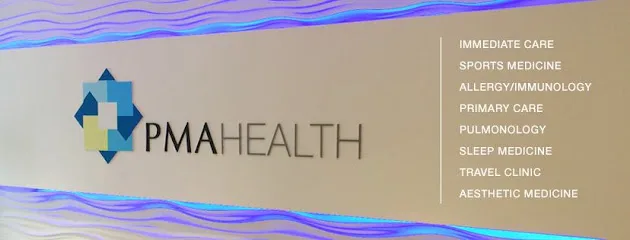
Local options can differ as well. PMA Health says its Immediate Care locations offer walk-in and virtual visits seven days a week, while the location and access details still belong to the particular service. If you are looking for a local clinic, PMA Health and Immediate Care by PMA Health – Falls Church is one option to review.